The Signal
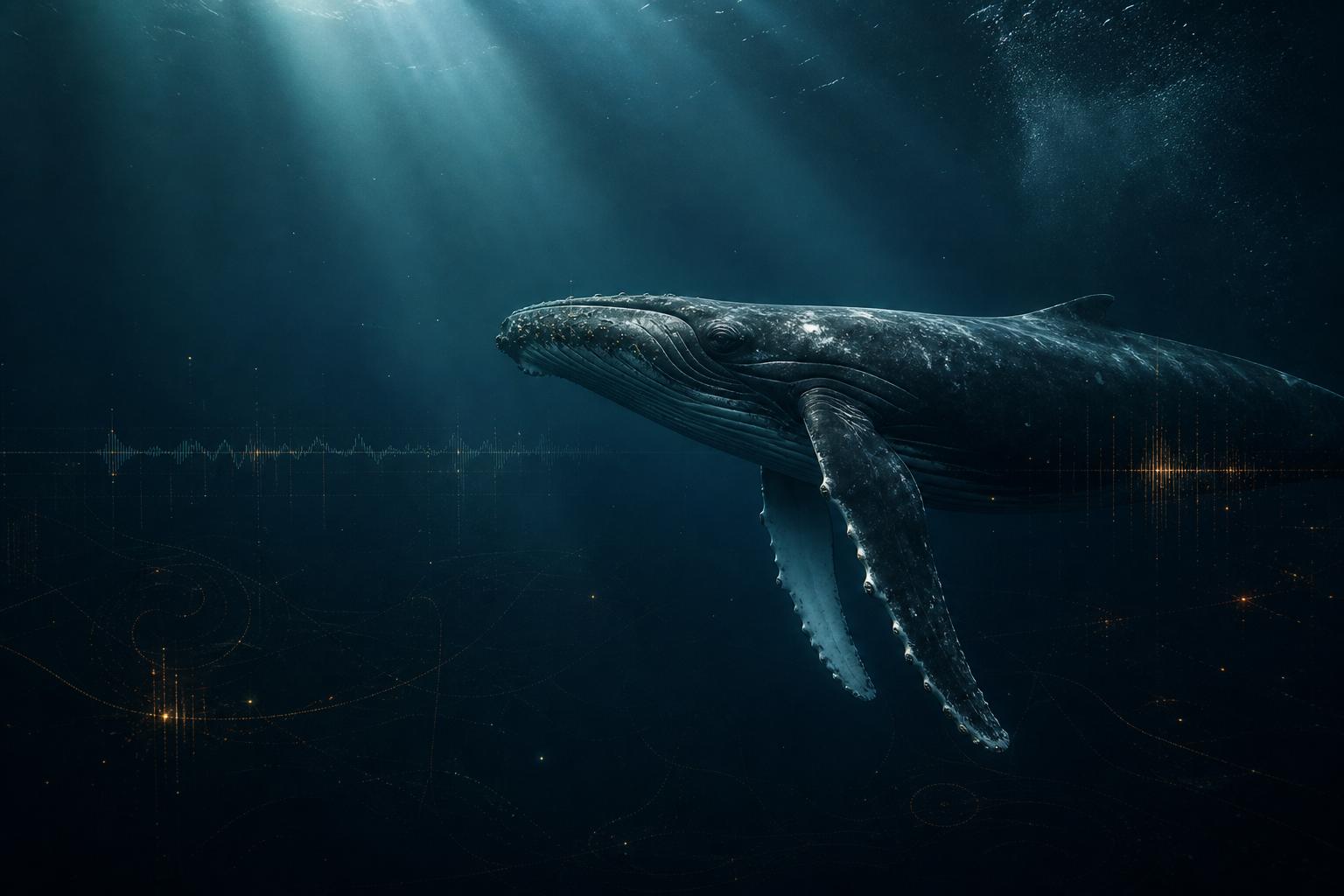
The ocean is not empty space. For whales, sound can be map, contact, warning, memory, and social connection.
Some whale groups carry socially learned vocal patterns that differ between communities. Researchers often describe these group-specific call patterns as dialects because they can remain stable, spread socially, and help mark group identity.
The careful point is not that whales speak like humans. The stronger point is that some whale communities inherit acoustic traditions, and those traditions depend on a soundscape that human activity is changing.
Why It Matters
When a species lives through sound, noise is not just background. Shipping, seismic surveys, construction, and other human-made sounds can change the acoustic world whales use to orient, feed, find each other, and maintain social bonds.
What The Research Says
Killer whale pods and other whale groups can show vocal traditions that are socially learned and stable across time. These patterns are often discussed as dialects because they differ between groups and can help maintain group identity.
Research on humpback whales and other cetaceans also shows that changing noise conditions can alter vocal behavior. This matters because whales use sound for orientation, social connection, feeding, and reproduction.
The careful claim is not that whales have human language. The stronger, safer claim is that some whale communities carry culture through sound, and human noise can interfere with the acoustic environment that culture depends on.
Evidence Pack
- Deecke, Ford and Spong, Animal Behaviour, 2000: vocal behavior in killer whales supports the idea of stable pod-specific call traditions.
- Foote et al., Biology Letters, 2006: killer whale vocal traditions can change and spread socially.
- Filatova et al., Journal of Theoretical Biology, 2015: killer whale call systems are used to study cultural evolution.
- Castellote, Clark and Lammers, Biological Conservation, 2012: fin whales altered calling behavior in response to seismic airgun noise.
- Johnson, Noad and Dunlop, Marine Pollution Bulletin, 2026: humpback whale responses to anthropogenic noise show how soundscape changes can affect behavior.